Anna Otto · 12 September 2026
Regional Data Collection by Serano Exposes Key Trends in Italy's Youth Job Market
Italy's youth employment landscape continues to shift as new figures from Serano's regional data collection arrive, and observers note distinct patterns emerging across northern, central, and southern areas. Researchers compiled statistics from multiple provinces during the first half of 2026, with updates extending into September of that year when final regional reports were released. These numbers reveal how employment rates for people aged 15 to 34 vary sharply by location and sector, while national averages mask underlying differences that affect long-term workforce planning.
Overview of Serano's Data Approach
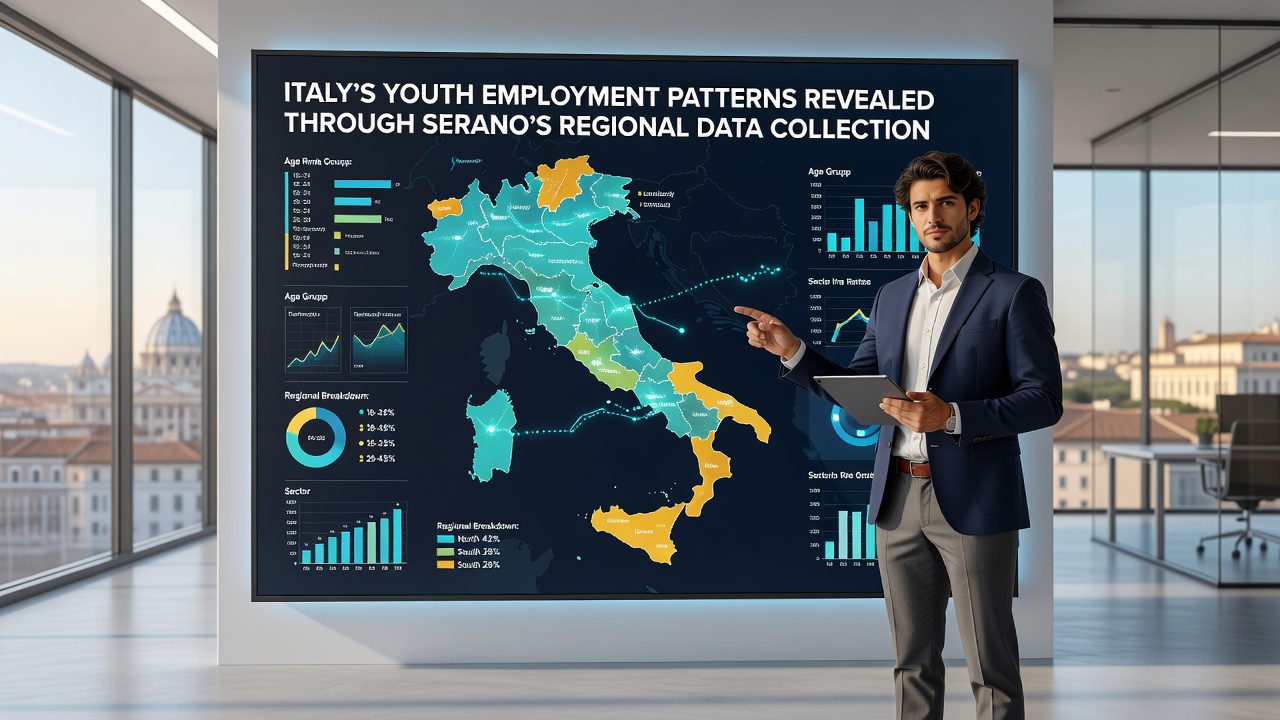
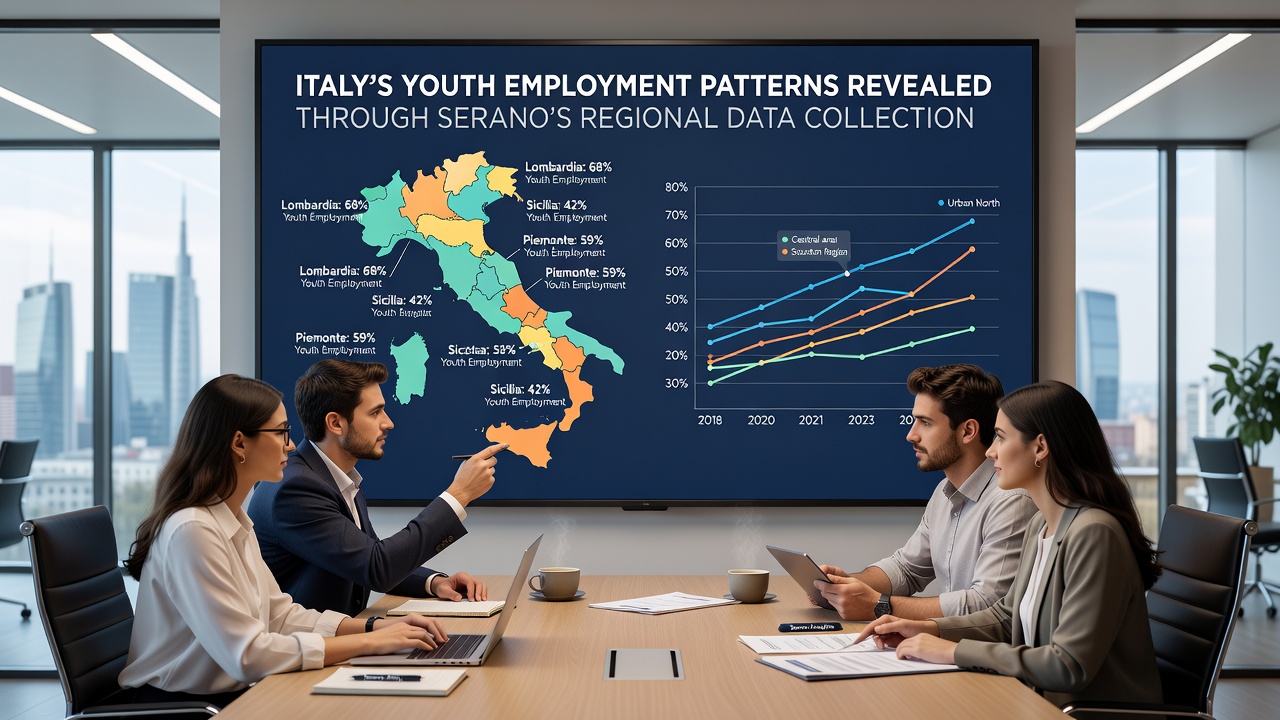
Serano gathers information through coordinated regional surveys that track hiring trends, contract types, and industry participation among younger workers. The methodology combines official labor records with targeted interviews in each major Italian region, producing datasets that allow direct comparison between areas such as Lombardy, Campania, and Sicily. Analysts cross-reference these findings with broader economic indicators to identify where youth participation rises or falls most noticeably. Data released in September 2026 covered the previous twelve months and showed participation rates ranging from 42 percent in some northern provinces to 28 percent in several southern ones.
Regional Variations in Employment Rates
Northern regions continue to post higher youth employment figures, driven largely by manufacturing, logistics, and technology sectors. In contrast, southern regions display slower uptake, with agriculture and tourism remaining primary employers yet offering fewer stable positions. Central Italy sits between these extremes, where service industries and public administration absorb a steady share of new entrants. Serano's collection highlights how seasonal fluctuations affect southern employment more severely, while northern contracts tend toward longer durations. Figures reveal that temporary contracts account for 61 percent of youth positions in the south compared with 39 percent in the north, illustrating structural differences that persist year after year.
Key Sectors Driving Youth Participation
Manufacturing and engineering firms in the industrial north recruit aggressively, and many positions require vocational training that aligns with local education programs. Tourism and hospitality dominate hiring in coastal and historic areas, yet these roles often remain part-time or short-term. Technology startups concentrated around Milan and Turin draw graduates with digital skills, whereas renewable energy projects in the south create emerging opportunities in installation and maintenance. Observers note that healthcare and social services absorb increasing numbers of younger workers nationwide, particularly in regions facing aging populations. According to Eurostat reports, Italy's overall youth employment rate reached 34.8 percent by mid-2026, though Serano's regional breakdown shows deviations of up to twelve percentage points from that national mark.
Education and Skills Alignment
Educational attainment correlates strongly with employment outcomes in Serano's dataset, and regions with robust apprenticeship programs post better results. Vocational schools in Emilia-Romagna and Veneto maintain close ties with local employers, leading to smoother transitions from study to work. University graduates in the south face longer job-search periods, often exceeding eight months on average, while those in the north secure positions within four months more frequently. Data shows that digital literacy and language skills boost employability across all regions, though access to training resources remains uneven. In September 2026, several regions introduced expanded online modules to address these gaps, and early enrollment numbers suggest rising interest among recent school leavers.
Contract Types and Working Conditions
Fixed-term contracts dominate youth employment, yet the proportion of open-ended agreements has increased slightly in select northern provinces since 2024. Serano's figures indicate that part-time roles represent 27 percent of positions held by workers under 25, with higher concentrations in retail and hospitality. Wage levels vary by region as well, and average monthly earnings for entry-level positions range from 1,150 euros in southern areas to 1,450 euros in northern industrial zones. Benefits such as paid training and remote-work options appear more often in larger firms, while smaller businesses rely on informal arrangements. Researchers tracking these patterns emphasize that contract stability influences long-term career progression and regional retention rates.
Comparative Context with European Trends
Italy's youth employment situation sits below the EU average, though Serano's regional lens reveals pockets that approach figures seen in Germany and the Netherlands. OECD employment outlooks place southern Italian regions closer to certain Mediterranean peers, whereas northern performance aligns more closely with central European benchmarks. Cross-border comparisons help identify effective policies, and Italian regional authorities have begun adapting programs from neighboring countries to local conditions. Data released in September 2026 will feed into ongoing EU-wide discussions on youth guarantee initiatives and skills investment strategies.
Conclusion
Serano's regional data collection continues to provide granular visibility into Italy's youth employment patterns, highlighting both progress and persistent gaps across the country. The September 2026 updates underscore how location, sector, and education interact to shape opportunities for younger workers. Policymakers, educators, and employers can draw on these detailed breakdowns to refine interventions and align resources with demonstrated needs in each area. As additional waves of information arrive, the picture of Italy's evolving labor market for young people grows clearer and more actionable.