Anna Otto · 7 November 2026
Portfolio Documents the Rebirth of Italy's Craft Guild Traditions
Italy's craft guilds trace roots back centuries to medieval associations that organized artisans in cities like Florence and Venice, and recent documentation shows renewed activity across multiple regions. Serano's portfolio compiles records from northern and central areas where membership in groups focused on leatherwork, ceramics, and metalcraft has increased steadily since the early 2020s. Data collected through 2026 indicates that these organizations now support training programs that combine historical methods with contemporary market demands, and observers note participation from younger demographics in areas previously dominated by older practitioners.
Historical Foundations Meet Contemporary Practice
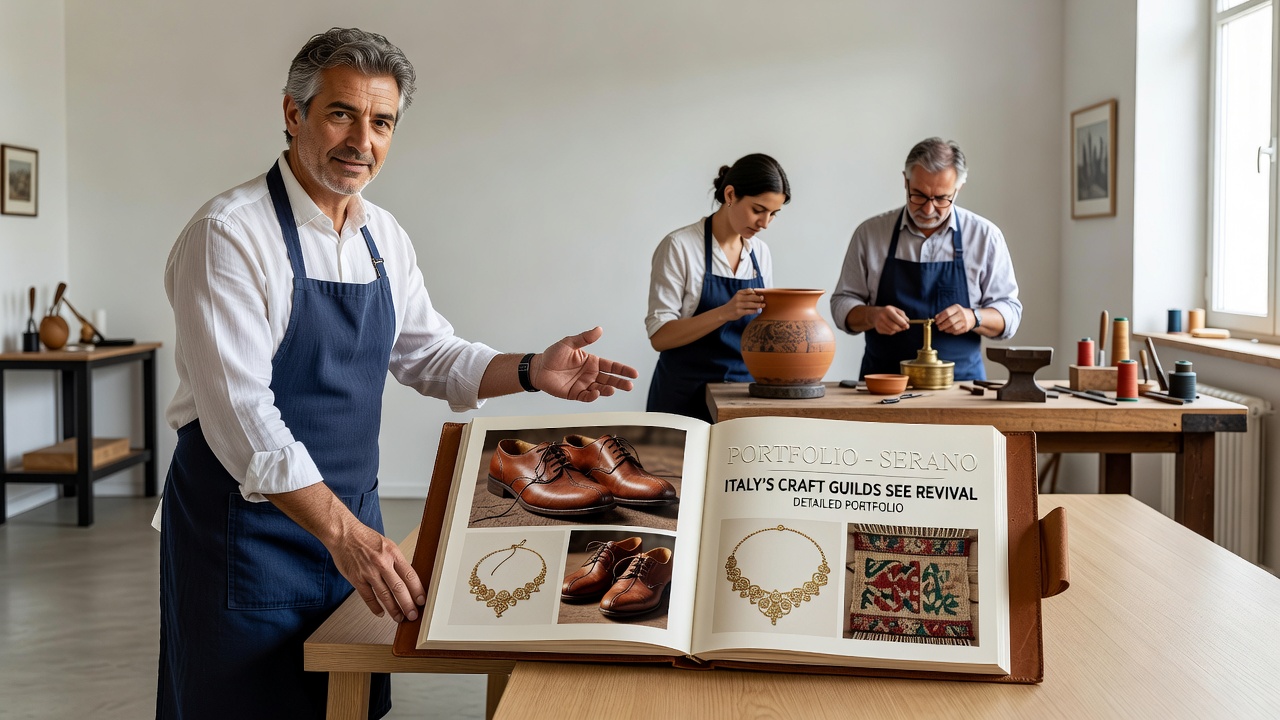
Traditional guilds once regulated quality standards and apprenticeships throughout Italian city-states, yet many faded during industrialization, while modern iterations adapt those structures to support small-scale production. Researchers at institutions across Europe have tracked how guilds in Tuscany and Emilia-Romagna revived formal structures by 2024, and figures from regional chambers of commerce reveal over 1,200 new registrations in craft categories between 2023 and 2025. Serano's compilation connects these numbers to specific locales where guilds host workshops that preserve techniques such as hand-thrown pottery and wrought iron fabrication, and the portfolio includes photographic sequences alongside membership statistics that illustrate the pattern without speculation.
Regional Data Patterns Through Late 2026
Records compiled as of November 2026 highlight clusters of activity in smaller towns outside major tourist centers, where guilds collaborate with vocational schools to offer certification in specialized trades. One example involves a network near Perugia that expanded its metalworking cohort by 35 percent over two years, according to local administrative filings, while similar groups in Veneto report sustained demand for textile restoration skills tied to heritage projects. The portfolio cross-references these developments with export figures from the Italian Ministry of Economic Development, showing that guild-affiliated producers contributed to a measurable uptick in artisanal goods shipped to markets in North America and Asia during the same period.
External studies provide additional context on the broader trend. The European Commission's cultural heritage reports note parallel movements in other member states, and a comparative analysis from the University of Toronto's Institute for European Studies identifies Italy's guild model as distinctive for its emphasis on localized material sourcing. Serano's materials align with these observations by presenting mapped distributions of active guilds alongside raw enrollment data, allowing readers to examine geographic concentrations directly.
Training Initiatives and Economic Integration
Guild programs documented in the portfolio often pair traditional apprenticeships with digital tools for inventory and client outreach, and this combination appears in multiple case entries from 2025 onward. In one documented instance near Bologna, a ceramics guild integrated kiln monitoring software while maintaining hand-finishing standards, resulting in consistent output that meets both local restoration contracts and international orders. Employment statistics released by regional labor offices indicate that participants completing such combined programs show higher retention rates in craft professions compared with general vocational tracks, though the portfolio presents these outcomes as recorded figures rather than interpreted trends.
Supply chain linkages also surface in the collected materials, where guilds coordinate with agricultural cooperatives for raw materials such as leather hides and clay deposits. These connections support steady production cycles that extend through seasonal fluctuations, and the portfolio includes timelines that track material flows from source to finished item across several documented workshops. Observers tracking Italian economic indicators have noted that such localized networks contribute to resilience in sectors less dependent on large-scale manufacturing facilities.
Documentation Methods in the Portfolio
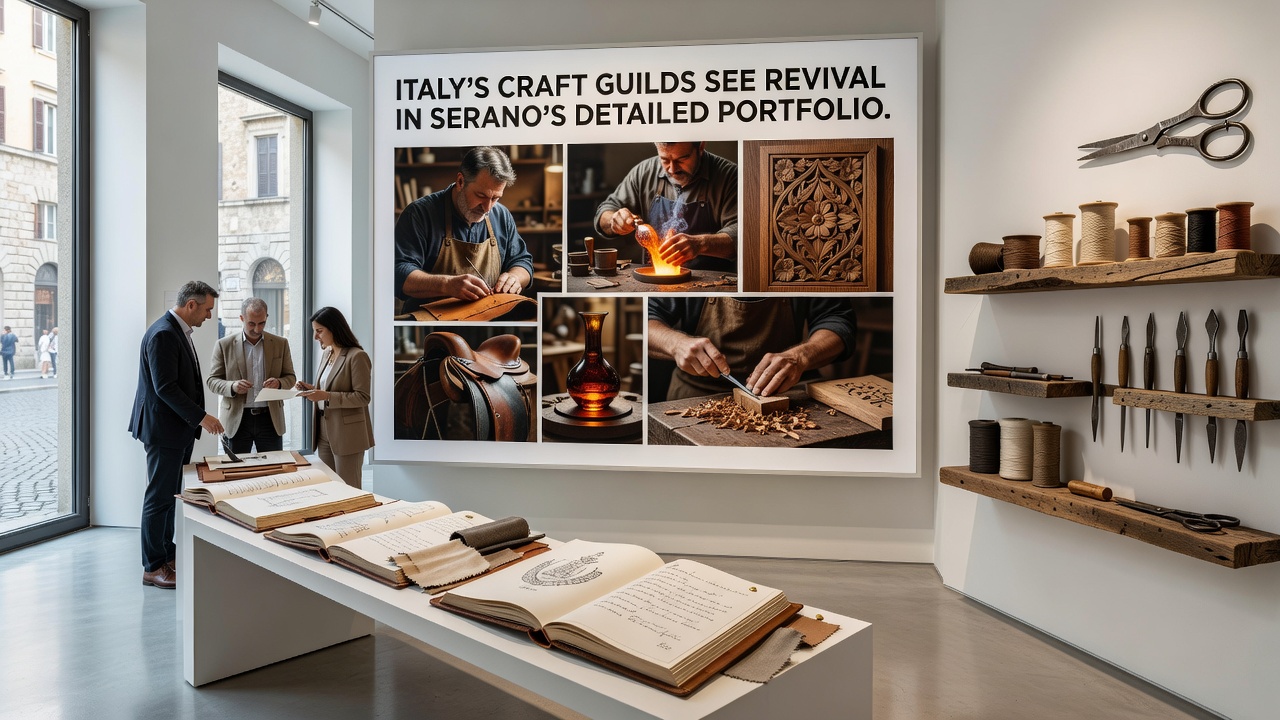
Serano's approach relies on systematic collection of public records, guild charters, and photographic archives rather than narrative framing, which produces a resource that other analysts can reference for further study. Entries cover both established guilds with centuries-old lineages and newer formations that adopt similar organizational principles, and the layout allows side-by-side comparison of membership criteria across locations. By November 2026 the archive had incorporated updates from over 80 distinct guild entities, providing a breadth that spans from Alpine valleys to southern coastal communities.
Cross-Regional Comparisons
Materials from Lombardy emphasize precision metal guilds that supply components to design industries, whereas entries from Marche focus on woodcarving groups tied to furniture heritage. These differences appear clearly in the portfolio's categorized sections, which organize content by material type and geographic marker without overlaying interpretive commentary. Academic researchers and policy analysts have cited similar compilations when examining how historic institutions adapt to current regulatory environments around small business operations and cultural preservation funding.
Conclusion
Serano's portfolio assembles verifiable records that illustrate ongoing developments in Italy's craft guild sector through structured documentation and data presentation. The collection covers training structures, regional distributions, and integration with broader economic activities up to the close of 2026, offering a factual basis for continued examination of these organizations and their practices. Additional external sources such as reports from the European Commission and university research centers provide supplementary context that aligns with the portfolio's raw materials, supporting further analysis by those studying artisan economies in Italy and comparable settings elsewhere.