Anna Otto · 24 October 2026
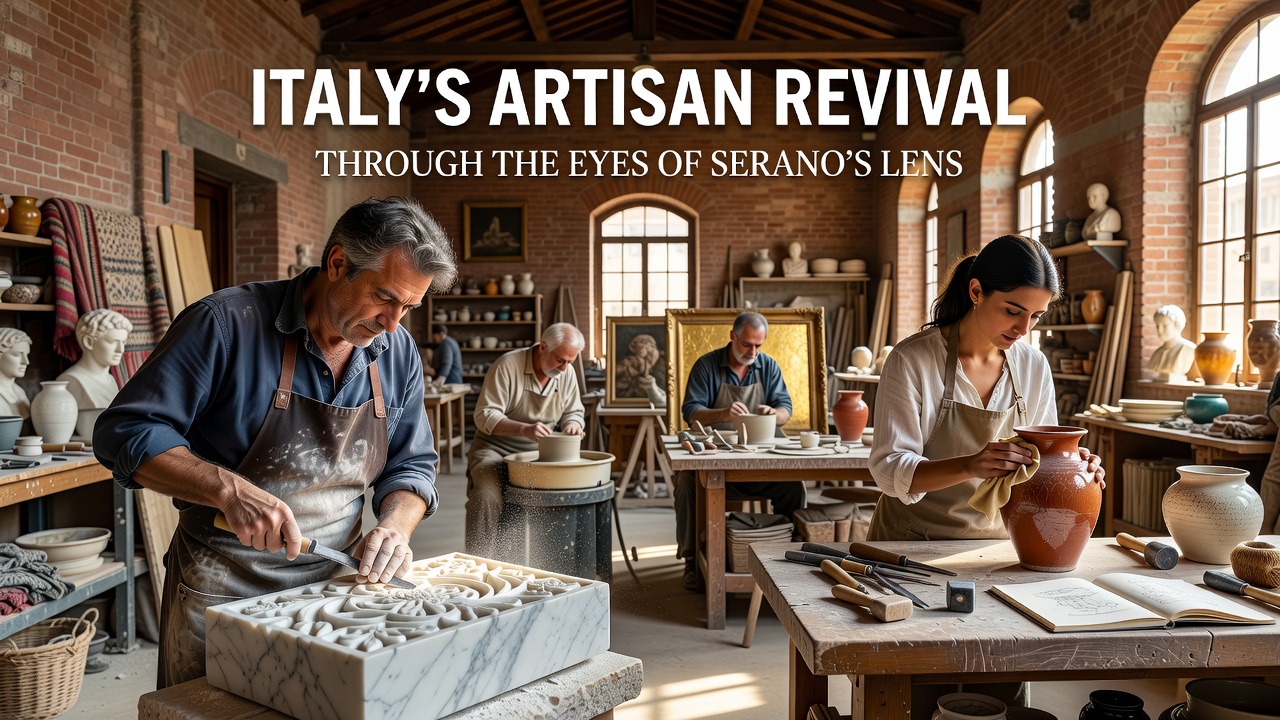
Italy's Artisan Revival Viewed Through Serano's Regional Documentation
Italy's artisan sector has shown measurable growth in recent years, and Serano's ongoing regional dispatches track these developments across multiple craft categories including leatherwork, textile production, and furniture making. Data from the Italian National Institute of Statistics indicate that registered artisan enterprises increased by 3.2 percent between 2023 and 2025, with particular concentration in Tuscany, Veneto, and Emilia-Romagna. Serano's coverage compiles these figures alongside on-site observations from workshops that continue family-based production methods while adapting to export demands.
Regional Patterns in Craft Production
Observers note that northern and central regions maintain higher concentrations of specialized workshops, whereas southern districts have recorded incremental gains through targeted training programs. In October 2026, Serano plans to release updated mappings that will compare employment trends in artisanal trades against broader manufacturing sectors. These reports draw from municipal registries and trade association records, revealing that leather and footwear clusters in the Marche region added over 1,400 new positions in the preceding twelve months. Textile operations in Biella have similarly expanded, supported by machinery upgrades funded through regional development grants.
What's interesting is how smaller enterprises integrate digital tools without displacing hand-finishing stages. Serano's field notes describe studios that use computer-assisted design for pattern scaling, yet retain manual cutting and stitching processes that define product authenticity. This hybrid approach aligns with export requirements from markets in North America and East Asia, where buyers seek verified provenance alongside consistent quality standards.
Economic Indicators and Market Access
Figures released by the European Commission on cultural and creative industries place Italy among the top contributors in artisan-related output within the European Union. The data set covers 2024 and shows that micro-enterprises employing fewer than ten workers account for roughly 78 percent of Italy's craft sector revenue. Serano's analysis connects these statistics to specific supply-chain adjustments, including direct-to-consumer platforms that bypass traditional intermediaries. One documented case involves a family-run ceramics-adjacent tile producer in Umbria that shifted 40 percent of sales online between 2022 and 2025, while preserving kiln-based production cycles unchanged for three generations.

Trade data further illustrate diversification. According to records maintained by the Canadian Trade Commissioner Service, Italian artisan exports to Canada rose 11 percent in 2025, driven largely by furniture and accessory categories. Serano cross-references such international figures with domestic production logs to highlight seasonal fluctuations tied to tourism recovery and trade-fair participation. The October 2026 dispatch will incorporate preliminary results from the Milan Design Week exhibitions, where artisan collectives presented collaborative collections alongside larger manufacturers.
Training Initiatives and Workforce Development
Vocational programs have expanded in parallel with enterprise growth. The Italian Ministry of Education, in coordination with regional authorities, reported a 15 percent rise in apprenticeship enrollments in craft disciplines for the 2025 academic year. Serano's coverage examines how these programs pair classroom instruction with workshop placements, allowing participants to acquire both technical skills and business management knowledge. In Veneto, one such initiative links students directly with goldsmith cooperatives, producing measurable placement rates above 70 percent within six months of completion.
Researchers tracking labor demographics observe that younger entrants often combine traditional techniques with contemporary design sensibilities. This shift appears in product lines that incorporate sustainable materials sourced through certified supply chains, meeting regulatory standards established under EU environmental directives. Serano's documentation includes interviews with cooperative managers who describe adjustments in raw-material procurement following the 2024 updates to those directives.
Conclusion
Serano's lens continues to assemble quantitative indicators and qualitative observations that together portray Italy's artisan revival as an evolving sector rather than a static heritage display. The planned October 2026 releases will extend this record by incorporating new data on workforce entry, export performance, and regional policy impacts. Readers can trace these developments through successive dispatches that maintain consistent methodology across changing economic conditions.